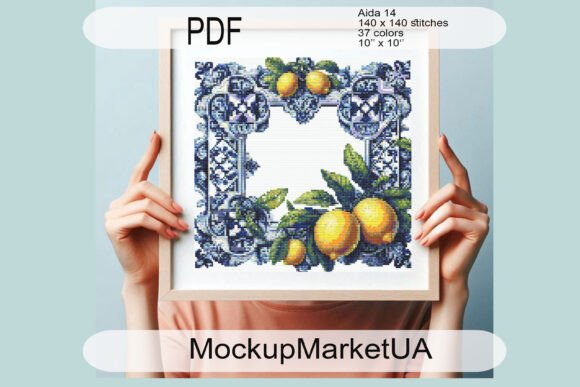
Lemons Fruit Cross Stitch Patterns PDF
A Designer’s Real-World Review for Small Business Merchandise
As an embroidery designer who’s developed branded patches and custom apparel for cafés, boutiques, bakeries, florists, and handmade studios over the past 12 years, I approach every pattern with two questions: *Will it translate cleanly to fabric under real production conditions?* and *Does it strengthen — not distract from — a small business’s brand identity?* When I first saw Lemons Fruit Cross Stitch Patterns PDF, my instinct was positive: lemons signal freshness, energy, and artisanal charm — perfect for businesses leaning into handmade authenticity. The title alone suggests friendliness and approachability, while “Cross Stitch Pattern” and “Instant Download Embroidery” signal it’s built for crafters and commercial users alike. It reads as playful yet grounded — not overly rustic, not sterile or digital-perfect. That balance is rare, and valuable.
How Lemons Fruit Cross Stitch Patterns PDF Performs Across Business Applications
This design shines where small-scale, high-character branding matters most. As an embroidered patch, it holds up beautifully on denim jackets, canvas tote bags, and staff aprons — especially when stitched in contrasting thread (think lemon-yellow on navy or sage green on cream). For a local café or bakery, it works as a subtle chest logo on work shirts or a sleeve accent on barista aprons. On caps, it reads clearly at 2.5" wide — ideal for front-panel placement without overwhelming the silhouette. As a tote bag design, it adds cheerful recognition without competing with printed typography. And because it’s rooted in cross stitch aesthetics — clean outlines, rhythmic spacing, organic shape — it complements other design assets like hand-drawn logos or serif typography, helping unify a boutique’s visual language.
In product packaging accents or customer gift tags, Lemons Fruit Cross Stitch Patterns PDF reinforces handmade credibility. Unlike vector-heavy graphics, its inherent texture says “made with care,” which builds trust with customers seeking authenticity. Etsy sellers report higher engagement when using this style on listing mockups — especially when paired with a printable mockup showing the design on linen napkins or ceramic mugs. For creative studios launching limited-run merch, it functions well as a unifying motif across multiple items: embroidered on tote bags, heat-applied (via iron-on transfer) on tea towels, or even adapted as a repeat border for packaging tape.
Where to Use Lemons Fruit Cross Stitch Patterns PDF Thoughtfully
Like any strong design, its impact depends on context. Avoid placing Lemons Fruit Cross Stitch Patterns PDF on highly curved surfaces (like the crown of a low-profile cap) without testing — the lemon’s rounded form can distort if digitized without curve compensation. At sub-1.75" sizes, fine interior details may collapse during stitching; always verify clarity at your target patch size. On dark uniforms, confirm thread color contrast — yellow-on-black works, but pale lemon tones may need metallic or high-sheen rayon for visibility. Also, watch stitch density: dense fill areas may pucker on lightweight cotton or textured linen unless paired with appropriate cutaway stabilizer. If your fabric has heavy texture (burlap, thick twill), simplify background elements or reduce fill coverage to preserve legibility.
Brand Identity & Customer Perception: More Than Just a Lemon
Lemons Fruit Cross Stitch Patterns PDF doesn’t just decorate — it communicates. Its cross stitch DNA signals craftsmanship, intention, and warmth. That subconsciously elevates perceived value: customers associate it with handmade products, locally made goods, and thoughtful curation. For a pet brand or florist, it softens corporate edges; for a modern bakery, it adds nostalgic charm without feeling dated. Consistent use across custom apparel, packaging, and digital assets creates visual rhythm — reinforcing recognition faster than abstract icons alone. Crucially, it avoids cliché: no cartoon faces, no exaggerated gloss. It feels genuine, which deepens customer trust and encourages repeat engagement.
Practical Notes Every Embroidery Designer Should Check
Before committing to production, run these checks:
- Test in black and white first — ensures tonal separation and silhouette strength without color bias.
- Verify readability at your smallest intended size — especially for cap fronts or pocket accents.
- Review thread color recommendations — does the pattern suggest palettes that align with your brand’s existing colors?
- Inspect spacing between key elements — tight gaps between lemon segments may merge during stitching on low-tension machines.
- Confirm hoop size compatibility — if you’re running high-volume jobs, match the design’s dimensions to your most-used hoops.
- Stitch a sample on your target fabric — test stabilizer type (cutaway vs. tear-away) and needle size for optimal finish.
- Create a client-facing mockup — use the digital embroidery file to generate realistic visuals before cutting thread.
- Compare alongside other design assets — does it scale and align visually with your logo, typography, and secondary patterns?
- Confirm commercial licensing — since this is listed under Patterns and Graphics, double-check usage rights for resale, mass production, and branded merchandise before launch.
Remember: Lemons Fruit Cross Stitch Patterns PDF is more than a decorative element — it’s a strategic brand tool. Used intentionally, it strengthens handmade presentation, supports cohesive small business merch, and delivers quiet professionalism that resonates with discerning customers. Whether you're embroidering staff uniforms for a neighborhood florist or building signature packaging for an Etsy shop, this pattern earns its place in your commercial embroidery toolkit — as long as you treat it like the versatile, business-ready asset it is.