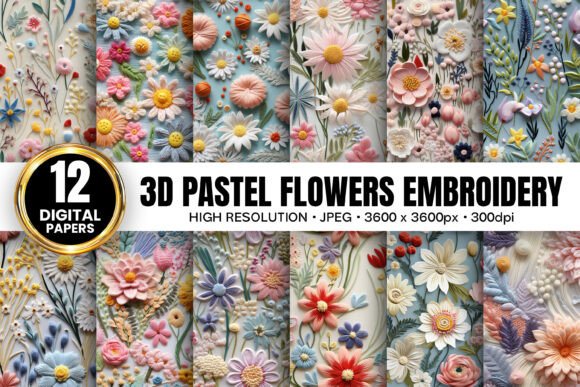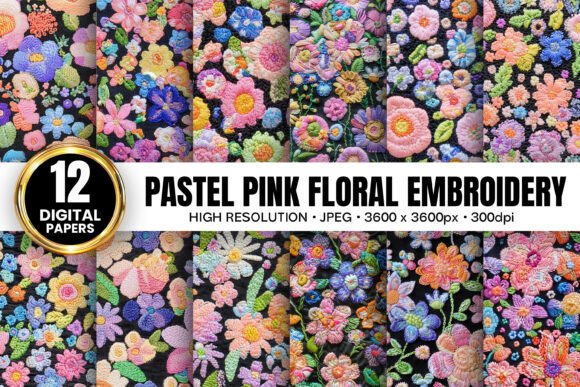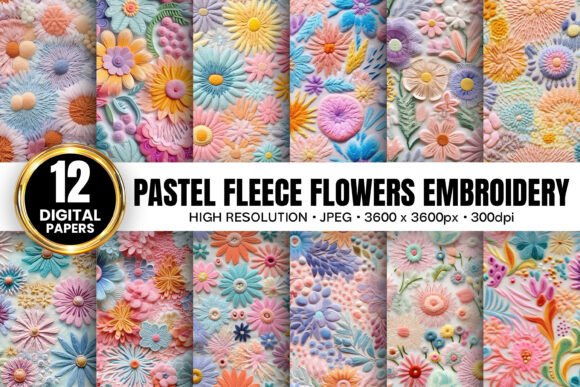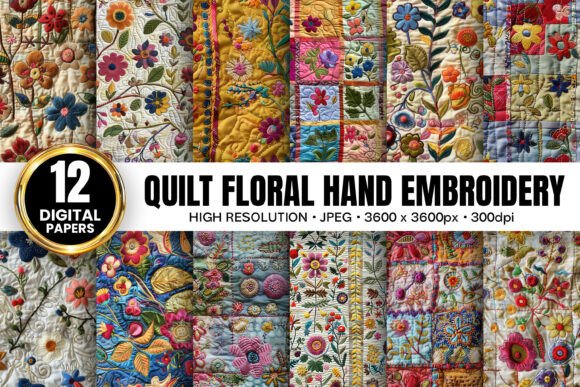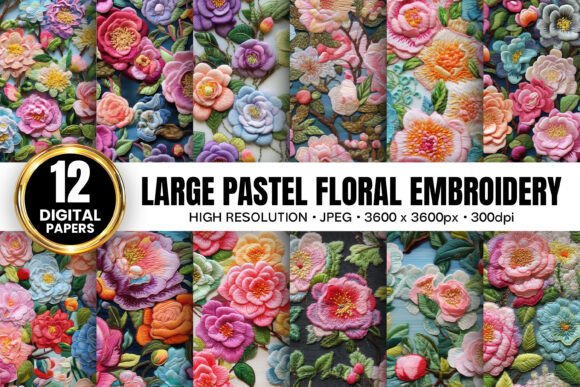
Large Pastel Floral Embroidery Patterns
First Impression: Soft, Fresh, and Instantly Inviting
As an embroidery designer who’s set up at over 40 craft fairs—from Portland’s Saturday Market to Nashville’s Handmade Holidays—I know what stops a shopper mid-aisle. Large Pastel Floral Embroidery Patterns lands exactly where it should: soft but not saccharine, floral but not fussy, large-scale but never overwhelming. It reads as modern cottagecore meets elevated handmade—think linen aprons with blooming peonies, not clipart roses. The word “pastel” signals approachability; “large” promises impact; “floral” taps into evergreen demand. No need to decode tone or trend—it feels premium, intentional, and ready for real-world display.
Where It Shines in Your Craft Fair Booth
This isn’t just another digital download—it’s booth-ready design equity. On tote bag designs, the scale fills the front panel beautifully without distortion, especially on natural canvas or unbleached cotton. As apron embroidery, it anchors the bib with gentle presence—neither too busy nor too sparse. For tea towel embroidery, the seamless repeat means you can stitch across the full width without visible seams, ideal for boutique kitchen lines. And on pillow covers or market bags, the pattern reads clearly from three feet away—the sweet spot for fair browsing.
Embroidered patches made from these patterns stand out in display trays: pastels pop against kraft paper backdrops, and the floral motif reads as giftable, not generic. Even as a small shop product like a fabric pouch or cap front, the design holds clarity—provided you size thoughtfully (more on that below). As a printable mockup for your Etsy listings? These 3600 x 3600 pixel JPGs render crisp on mobile and desktop, helping buyers visualize before they click “add to cart.”
Production Reality Check: What Works—and What Needs Care
Yes, these are digital embroidery files in JPG format—but remember: they’re starting points, not finished stitch files. You’ll need to digitize them properly for machine embroidery. That said, their high-resolution, 300 DPI quality gives you real flexibility. The large canvas makes spacing, motif isolation, and scaling intuitive—no squinting at tiny vectors. You can easily crop a single bloom for a delicate cap embroidery, or use the full repeat for bold handmade gifts like pillow covers.
But here’s where attention matters: dense stitch areas in layered petals may require extra stabilizer on lightweight fabrics, and tight curves could challenge hoop clearance on curved surfaces like baseball caps. On textured towels or thick denim, test stitch density first—what reads softly on screen may feel heavy in thread. And if you’re stitching on dark fabric, confirm your chosen thread colors maintain contrast; pastels shine brightest against ivory, oat, or slate—not black or navy—unless you intentionally go high-contrast.
Selling Smarter: Clarity, Consistency, and Commercial Confidence
At a craft fair, customers don’t read specs—they read vibe. Large Pastel Floral Embroidery Patterns communicates handmade quality instantly. Its cohesion supports brand consistency: whether you’re selling embroidered tea towels *and* matching pouches, the shared motif tells a story. In your booth display, one well-stitched sample—say, a linen apron with centered floral motif—draws eyes faster than five mismatched items. That visual harmony boosts perceived value and encourages bundle sales (“Oh, you have the same flower on the tote *and* the pillow?”).
For Etsy sellers and digital sellers, this collection is low-friction inventory: no physical stock, just scalable design assets. But remember—these are Graphics, not pre-digitized machine embroidery designs. Before listing finished products, verify commercial licensing terms. If your business relies on wholesale or third-party production, confirm usage rights cover your intended output (e.g., stitched-on patches sold to boutiques).
My Must-Do Designer Checklist Before Stitching
- Test on scrap fabric—especially your most common base (linen, cotton duck, terry) to assess drape and stitch definition.
- Check thread contrast across your palette: mint, blush, lavender, and buttercream all behave differently under light.
- Review spacing and isolation: Can you cleanly extract one bloom for a small patch? Does the repeat align smoothly across seams?
- Confirm hoop size compatibility—some motifs may exceed standard 4x4 hoops; plan for larger frames or repositioning.
- Inspect stitch density in petal layers—overly dense areas risk puckering on delicate weaves.
- Use the right stabilizer: tear-away for stable cottons, cut-away for knits or stretchy blends.
- Create at least one real mockup—not just digital, but stitched, pressed, and photographed in natural light.
- Compare fabric colors side-by-side: a pale pink thread on ecru reads differently than on oat or cream.
- Confirm commercial licensing before selling any finished product—this protects your small shop product line long term.
Final Thought: A Pattern That Sells Itself—If You Let It Breathe
Large Pastel Floral Embroidery Patterns doesn’t shout. It invites. It’s the kind of design that makes a customer pause, tilt their head, and say, “That’s lovely—I want that feeling in my home.” In a crowded craft fair, that quiet confidence is gold. Use it boldly on large-format pieces where its scale sings, support it with thoughtful thread choices and clean digitizing, and let its soft strength do the work. This isn’t filler. It’s finish.